Introduction
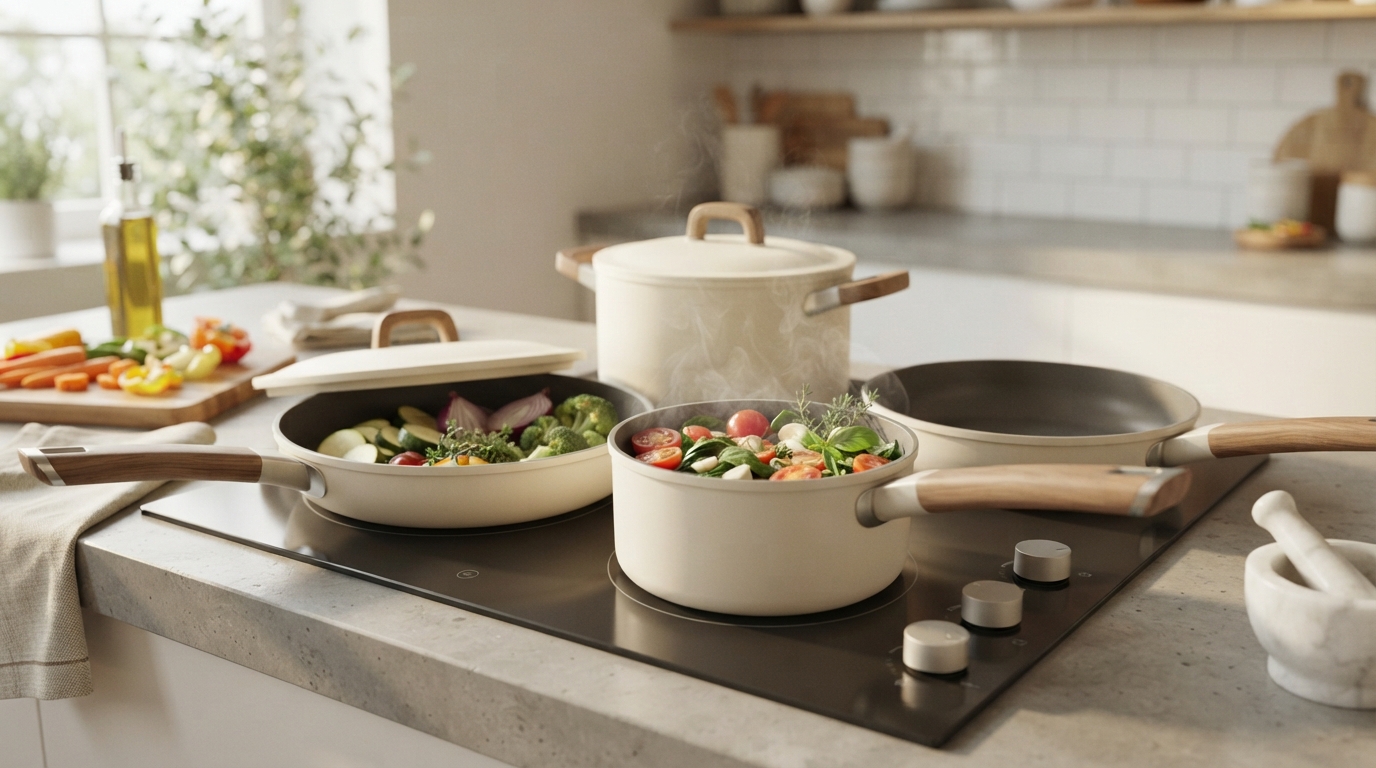
Building out a kitchen’s cookware collection piece by piece can take years, and it often results in a mismatched combination of pots and pans acquired at different times, from different brands, with varying levels of quality. A complete cookware set offers a different approach: a coordinated collection of pieces, generally sized to cover most everyday cooking needs, purchased and used together from the start. The CAROTE 14-Piece Nonstick Cookware Set fits into this category, offering a lightweight, nonstick collection of pots and pans designed for even heating, compatibility with all stovetop types, and manufactured without PFOA, a chemical historically associated with some nonstick coatings.
This article walks through what a cookware set like this one generally includes, how the individual pieces tend to be used in everyday cooking, who’s likely to benefit most from a full set versus building a collection piece by piece, and the practical factors worth considering before making a decision. As with any kitchen equipment, the intent here is to provide clear, balanced information rather than a sales pitch.
Key Features
A 14-piece cookware set like this one is generally built around a handful of core characteristics that apply across the collection as a whole.
Nonstick Coating The defining feature of this cookware line is its nonstick surface, designed to reduce food sticking during cooking and simplify cleanup afterward, generally requiring less oil or butter than uncoated cookware to prevent food from adhering to the pan.
Lightweight Construction Compared to heavier cast iron or some stainless steel cookware, this set is generally designed to be lighter in weight, which can make handling, pouring, and cleaning individual pieces noticeably easier, particularly for larger pots or pans that might otherwise feel cumbersome.
Even Heating The cookware is designed with heat distribution in mind, intended to reduce hot spots that can cause uneven cooking or scorching in certain areas of a pan while other areas remain undercooked.
All-Stovetop Compatibility This set is generally compatible with a range of stovetop types, including gas, electric, and induction, which broadens its usability across different kitchen setups compared to cookware designed for only one specific stovetop type.
PFOA-Free Manufacturing PFOA, or perfluorooctanoic acid, was historically used in the manufacturing process of some nonstick coatings, though it has been largely phased out of consumer cookware production industry-wide. This set is specifically marketed as PFOA-free, reflecting that broader shift in nonstick cookware manufacturing standards.
Complete 14-Piece Collection Rather than purchasing individual pots and pans separately, this set bundles multiple pieces together, generally including a range of pan and pot sizes along with lids, providing a more complete starting point for stocking a kitchen compared to buying items one at a time.
How It Can Be Used
A full cookware set like this one is generally designed to cover a broad range of everyday cooking tasks, given the variety of pot and pan sizes typically included.
Everyday sautéing and frying is a common use for the included frying pans, which benefit from the nonstick surface to reduce sticking when cooking eggs, pancakes, or sautéed vegetables with minimal added fat.
Simmering soups, sauces, and stews typically falls to the larger pots included in the set, which are generally sized to handle moderate batches of liquid-based dishes without needing a separate stockpot for everyday cooking.
Boiling pasta, grains, or vegetables is another common task for the larger pots, particularly those included with lids, which help retain heat and reduce cooking time for boiling-based recipes.
Preparing sauces or reheating smaller portions often falls to the smaller saucepans typically included in a full set, offering a more appropriately sized option than using a larger pot for a small quantity of liquid or sauce.
Searing and browning proteins benefits from the nonstick surface as well, though it’s worth noting that very high-heat searing is generally better suited to uncoated stainless steel or cast iron cookware, since nonstick coatings typically have specific heat tolerance limits that are important to respect for the coating’s longevity.
Everyday meal prep across multiple dishes is where a complete set arguably offers the most practical value, since having multiple appropriately sized pots and pans on hand at once allows several components of a meal to be prepared simultaneously without needing to wash and reuse the same piece of cookware mid-meal.
Kitchen setup for new households is another common use case, particularly for those moving into a new home, starting to cook more independently, or replacing an outdated, mismatched cookware collection with a coordinated set.
Who It May Be Suitable For
Given the scope of a full cookware set, this type of product tends to appeal to a fairly wide range of households, though certain situations make it particularly relevant.
Those setting up a kitchen from scratch, such as people moving into a first apartment or home, often find a complete set more practical and often more cost-effective than purchasing individual pieces separately over time.
Households replacing older, worn cookware may appreciate starting fresh with a coordinated set, particularly if their previous cookware had scratched or degraded nonstick coatings that were no longer performing well.
Cooks who value lighter, easier-to-handle cookware may specifically benefit from this set’s lighter weight construction compared to heavier traditional materials like cast iron, particularly for those who find heavier pots and pans physically difficult to maneuver.
Kitchens with mixed stovetop compatibility needs, such as households that have switched between gas, electric, or induction stovetops, or who cook in more than one location, may value the set’s broad compatibility across stovetop types.
Those looking to reduce oil or butter usage in everyday cooking may find the nonstick surface helpful for lower-fat cooking methods, since less oil is generally needed to prevent sticking compared to cooking with uncoated cookware.
Budget-conscious buyers looking for a complete kitchen solution may find a bundled set a more economical starting point than purchasing high-end individual pieces from multiple different cookware lines.
On the other hand, experienced cooks who specifically prefer uncoated stainless steel or cast iron for high-heat searing, or those who already have a well-curated cookware collection built up over time, may find less added value in a nonstick-focused set like this one, particularly if their cooking style relies heavily on techniques not well suited to nonstick coatings.
Important Things to Consider
There are several practical points worth thinking through before choosing a nonstick cookware set like this one.
Nonstick coatings have heat limitations. Most nonstick surfaces, regardless of brand, are generally not intended for very high-heat cooking, since excessive heat can degrade the coating over time and potentially release fumes that aren’t safe to inhale. It’s worth reviewing manufacturer guidance on maximum recommended stovetop heat settings for nonstick cookware specifically.
Utensil compatibility matters for coating longevity. Nonstick surfaces are generally more prone to scratching from metal utensils compared to uncoated cookware, so using silicone, wood, or other non-metal utensils is typically recommended to help preserve the coating over time.
Nonstick coatings degrade gradually with use. Like most nonstick cookware, this set’s coating is likely to show some wear over time with regular use, particularly with high heat, metal utensils, or abrasive cleaning methods, which is a normal characteristic of nonstick cookware in general rather than necessarily a product-specific issue.
Set size may not match every household’s needs. A 14-piece set includes a specific combination of pot and pan sizes, which may not perfectly align with every household’s cooking habits. It’s worth reviewing the specific pieces included to confirm they match your typical cooking needs, rather than assuming a larger piece count automatically means better overall value for your situation.
Storage space for a full set. Fourteen pieces represent a fairly substantial amount of cookware, so it’s worth considering available cabinet or storage space before committing to a full set, particularly in smaller kitchens where storage can already be limited.
Dishwasher versus hand-washing recommendations. While many nonstick cookware sets are marketed as easy to clean, it’s worth checking specific care instructions, since some nonstick coatings are better preserved with hand washing rather than regular dishwasher use, even if dishwasher-safe in a technical sense.
Induction compatibility depends on base construction. While this set is marketed as compatible with all stovetop types, including induction, it’s worth confirming this detail specifically if you cook on an induction stovetop, since not all cookware, particularly some nonstick lines, includes the magnetic base material required for induction compatibility.
Comparison of General Categories
Rather than comparing this specific set to other individual cookware brands, it’s often more useful to compare general categories of cookware to understand how a nonstick set like this one fits into the broader landscape.
Nonstick cookware versus stainless steel cookware. Nonstick cookware generally requires less oil and offers easier food release and cleanup, making it well suited to everyday cooking tasks like eggs, pancakes, and delicate proteins. Stainless steel, while requiring more oil or fat to prevent sticking, generally tolerates higher heat and metal utensils better, and is often preferred for searing and browning techniques that benefit from more direct, intense heat contact.
Nonstick cookware versus cast iron cookware. Cast iron is prized for its heat retention and ability to develop a natural seasoning layer over time with proper care, making it well suited to high-heat searing and long, slow cooking methods. It’s also considerably heavier than most nonstick cookware and requires specific maintenance to prevent rust and maintain seasoning, which is a different care routine compared to the nonstick coatings found in this type of set.
Complete cookware sets versus individually purchased pieces. Buying a complete set generally offers more upfront value and ensures a coordinated collection of appropriately sized pieces from the start. Purchasing pieces individually allows for more customization, potentially mixing materials like stainless steel for searing with nonstick for everyday cooking, though this approach often takes longer and can be more expensive overall if pieces are bought one at a time rather than as a bundle.
Lightweight nonstick sets versus heavier, higher-end cookware lines. Lighter nonstick cookware, like this set, generally prioritizes ease of handling and accessibility, which suits everyday cooking for many households. Heavier, often more expensive cookware lines, sometimes involving multi-layer stainless steel or clad construction, may offer more even heat distribution and durability over the very long term, at the cost of increased weight and typically higher upfront investment.
Frequently Asked Questions
Is nonstick cookware safe to use for everyday cooking? Nonstick cookware manufactured without PFOA, in line with current industry standards, is generally considered safe for everyday cooking when used according to manufacturer guidelines, particularly regarding recommended heat levels and proper care to maintain the coating’s condition over time.
Can this type of cookware be used on an induction stovetop? Compatibility depends on whether the cookware’s base includes the magnetic material required for induction heating. Sets marketed as all-stovetop compatible, including this one, are generally designed to work with induction, but it’s worth confirming this detail specifically if induction compatibility is a priority for your kitchen.
How long does nonstick coating typically last with regular use? Nonstick coating lifespan varies considerably based on how the cookware is used and cared for, including heat levels, utensil choice, and cleaning methods, but most nonstick cookware will show some gradual wear over time with regular use, which is a normal characteristic of the category rather than necessarily indicating a defect.
Should nonstick cookware be hand washed or is it safe for the dishwasher? This varies by specific product, so it’s worth checking the manufacturer’s care instructions, though many nonstick coatings tend to last longer with hand washing rather than regular dishwasher use, even in cases where dishwasher use is technically permitted.
What does PFOA-free actually mean for cookware? PFOA-free indicates that the cookware’s nonstick coating was manufactured without perfluorooctanoic acid, a chemical historically used in some nonstick coating processes that has been largely phased out across the cookware industry due to health and environmental concerns identified in past research.
Can metal utensils be used with this type of cookware? Metal utensils are generally not recommended for use with nonstick cookware, since they can scratch and gradually degrade the coating over time. Silicone, wood, or other non-metal utensils are typically recommended to help preserve nonstick surfaces for longer.
Is a 14-piece set more cost-effective than buying pieces individually? Bundled cookware sets are often more cost-effective upfront compared to purchasing an equivalent number of individual pieces separately, though the actual value depends on whether the specific combination of pieces included in the set matches what your household would have purchased on its own.
Conclusion
The CAROTE 14-Piece Nonstick Cookware Set represents a fairly comprehensive approach to stocking a kitchen with coordinated, everyday cookware, combining a nonstick coating, lightweight construction, broad stovetop compatibility, and PFOA-free manufacturing into a single bundled collection. Its scope makes it a reasonable starting point for households setting up a kitchen from scratch or replacing older cookware, particularly for those who prioritize easier cleanup and lighter-weight handling over the specific heat tolerance and searing capability associated with uncoated stainless steel or cast iron.
Whether this type of set fits your kitchen depends largely on your typical cooking style, how much you rely on high-heat searing techniques better suited to other cookware materials, and whether the specific combination of pieces included matches what your household actually needs. Weighing these practical factors against your own cooking habits is generally the most useful way to determine if a full nonstick cookware set like this one is the right fit.